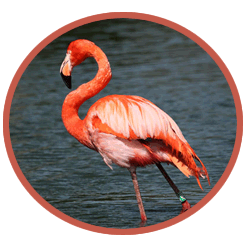
What Do Flamingos Look Like?
Flamingos are famous for their bright pink color! But guess what? They're not born pink. Baby flamingos are actually gray or white. They turn pink from the food they eat!
Flamingos have incredibly long legs - some of the longest legs compared to their body size of any bird! Their legs can be 30 to 50 inches long. That's taller than most kindergarteners!
Their beaks are super special! Flamingo beaks curve downward like a bent straw. This unique shape helps them eat in a very special way. The top part of their beak is smaller than the bottom part - the opposite of most birds!
There are six different types of flamingos. The biggest is the Greater Flamingo, which can be 5 feet tall - as tall as a grown woman! The smallest is the Lesser Flamingo, about 3 feet tall.
Flamingos have webbed feet like ducks! This helps them walk in muddy water without sinking. Their feet are also pink!
Where Do Flamingos Live?
Flamingos live in warm places around the world! You can find them in parts of Africa, South America, the Caribbean, and southern Europe and Asia.
Flamingos love shallow water! They live near lagoons, lakes, and coastal areas where the water is not very deep. They prefer salty or very salty water called "brine." Some flamingos even live near water that's too salty for most other animals!
The water where flamingos live is often muddy and full of algae. This might not sound nice, but it's perfect for flamingos! The muddy water is full of the tiny creatures and algae they love to eat.
Flamingos are social birds. They always live in groups called colonies. Some colonies have just a few dozen flamingos. Others have thousands, even millions of birds all together! The biggest colony ever seen had over 2 million flamingos!
What Do Flamingos Eat?
Here's the cool secret - flamingos get their pink color from their food! They eat tiny creatures and algae that contain special pink and orange colors called carotenoids (say: kuh-RAH-tuh-noyds). When flamingos eat these foods, the colors build up in their feathers and turn them pink!
What do flamingos eat?
- Blue-green algae (their favorite!)
- Tiny shrimp called brine shrimp
- Small crustaceans
- Microscopic plants called diatoms
- Insect larvae
Flamingos eat in a very special way! They put their heads upside down in the water. Then they use their tongue like a pump to push water through their beak. Their beak works like a strainer, catching all the tiny food while the water flows out!
Inside their beaks are special comb-like filters called lamellae (say: luh-MEL-ee). These filters trap the tiny food while letting the water escape. It's like having a built-in colander!
A flamingo can eat about 9 ounces of food every day. That doesn't sound like much, but remember - they're eating thousands and thousands of tiny creatures!
Baby Flamingos
Baby flamingos are called chicks, and they're adorable! When they hatch, they have fluffy gray or white feathers. They don't look anything like their pink parents!
Flamingo parents build nests that look like mud volcanoes! They pile up mud until it's about 12 inches tall. Then they make a small dip on top for the egg. This keeps the egg safe from flooding.
Mother flamingos usually lay just one egg. Both parents take turns sitting on the egg to keep it warm for about a month.
When baby flamingos hatch, they can walk almost right away! But they stay in the nest for a few days while their legs get stronger.
Baby flamingos have straight beaks at first. It takes a few months for their beaks to curve into that special flamingo shape. Until then, their parents feed them that special red "milk."
Young flamingos form groups called crèches (say: KRESH-es). It's like a flamingo daycare! Thousands of chicks gather together while the parents go find food. But parents always come back to find and feed their own chick!
It takes 2-3 years for a young flamingo to turn fully pink! The color gradually appears as they start eating the right foods.
Why Are Flamingos Special?
Flamingos are designed with amazing features! Their special beaks, long legs, and unique diet make them perfectly suited for living in shallow, salty waters where other birds can't survive.
These beautiful birds show us how food can affect an animal's appearance! Without the right food, flamingos would be white instead of pink. It's like how eating carrots can make your skin a little orange!
Flamingos help their environment by eating huge amounts of algae. This helps keep the water balanced and healthy for other creatures.
Some flamingo species need our protection. Changes in their habitat and water quality can affect their food supply. Conservation groups work hard to protect flamingo homes around the world!